
Director’s Statement
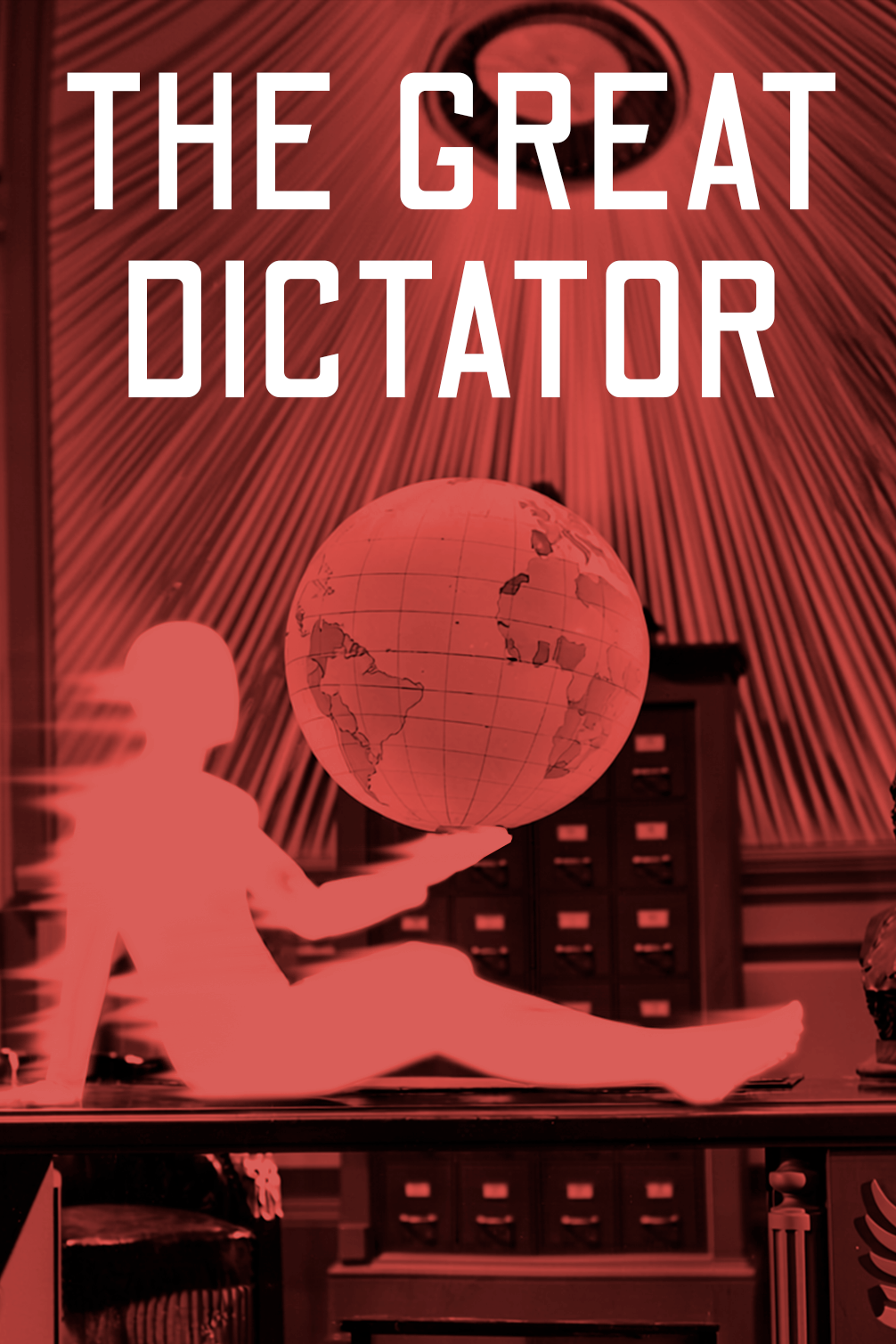
The title comes from Charlie Chaplin's 1940 film "The Great Dictator," a bold satire that used performance and cinema to confront Hitler and fascism at the height of Nazi power. Chaplin understood that rhetoric shapes history, for good and evil. In our installation, everyone becomes "the great dictator" for a moment. You command the stage. You wield the power of words. This isn't about glorifying dictators—it's about understanding how oratory moves masses, how performance creates belief, and how we must critically examine the speeches that shaped our world. By embodying these moments, we confront them rather than ignore them.
Ultimately, this project is about memory. Not the kind of memory where speeches sit in archives, untouched. When you speak MLK's words, you feel them differently. When you see yourself at the March on Washington, history becomes personal. This isn't about replacing the original speakers—it's about asking what we can learn by stepping into their shoes. It's about making archives relevant to new generations. And it's about preparing for a future where AI can generate any reality. We need to practice distinguishing truth from fiction, understanding how rhetoric works, and grappling with difficult history. This installation does all of that while creating something beautiful, viral, and emotionally powerful.
– Gabo Arora
Let’s Make History Together
Our Approach
FOUR INNOVATIONS
Embody history through performance
AI reacts to you in real-time
Your voice clones to complete the speech
Share a personal film with the world
This isn't just a tech demo or photo booth. Four things make it unprecedented: First, embodiment—you engage with primary texts performatively, not just reading about them. Second, real-time AI response—the installation reacts to your tone, pacing, and delivery, creating a unique experience for each person. Third, voice cloning—we don't just record you; we generate the full speech in YOUR voice. And fourth, it's designed for virality. Like Baz Luhrmann's "Sunscreen" speech-song or Apple Music karaoke, these videos are shareable artifacts that spark conversations. Every user gets a different experience even with the same speech. Same words, different meaning when spoken by a teenager vs. an immigrant vs. an elder. The archives come alive and become relevant again.
At the heart of the installation are three massive screens arranged in a theatrical triptych. Left screen: historical footage and cultural context from the era. Center screen: your teleprompter, with text synchronized like karaoke. Right screen: AI-generated audiences that react to YOUR tone and delivery in real-time. As you perform, the room transforms—lighting shifts, sound design evolves, archival footage triggers. It's an always-on video art installation that becomes participatory when you step up to the podium. Even without participating, visitors can sit and watch this beautiful, mesmerizing multi-channel documentary cycling through history's greatest speeches.
You approach the installation, watching it cycle through historical speeches. Put on headphones for deeper immersion. The system recognizes you at the podium and asks: “Are you ready to embody history?" You select from 8-10 curated speeches—MLK, JFK, Emma Goldman, and so on. You perform for 60-90 seconds. The screens react, the lighting changes, the sound builds. You enter your email and leave. Within 5 minutes, your phone buzzes. You open the video and cannot believe your eyes: That's YOU at the Lincoln Memorial in 1963. YOUR voice soundtracking the entire “I Have a Dream" speech. Your face in the crowd. It's uncanny, powerful, and yours to keep or share.

THEIR WORDS.
YOUR VOICE.
YOUR MOMENT.
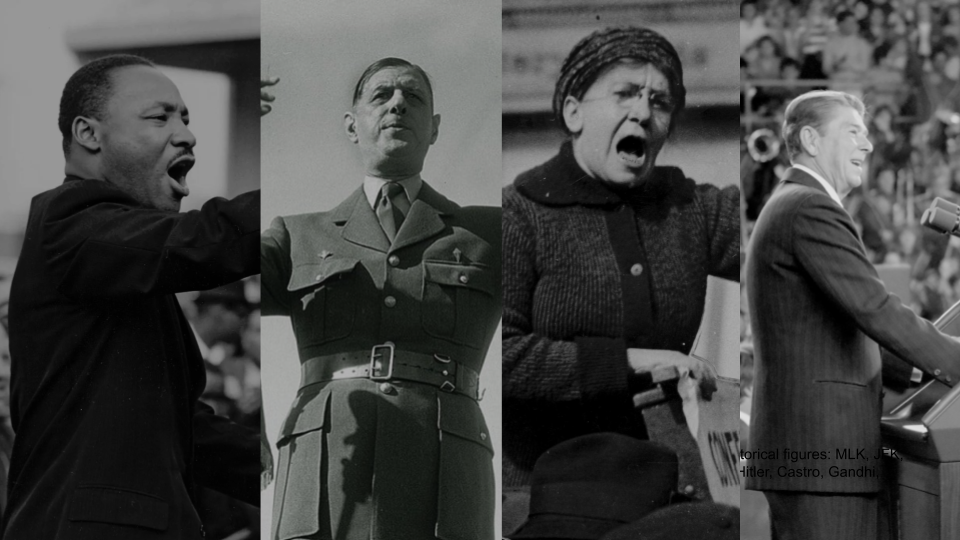
MEMORY IS ACTIVE, NOT PASSIVE
When we embody history, we change our relationship to it.
The future needs voices that remember the past.
ai For Good
This is a critical moment. AI can generate anything—including convincing historical forgeries. Deepfakes are being weaponized for misinformation. We're at a crossroads: will this technology help us understand history, or distort it beyond recognition? "The Great Dictator” models ethical AI use: clear labeling, explicit consent, transparency, limited scope. It asks profound questions: Who gets to speak historic words? Can technology create empathy across time, or does it distance us? What does it mean to "be" in a historical moment you weren't present for? By making this an artwork—not a tech demo—we create space for society to grapple with these questions. Museums and cultural institutions need to lead this conversation, not just tech companies.
Where people Gather
This installation is designed to be versatile and scalable. It can live in major museums with full infrastructure—three 12-foot screens, theatrical sound, professional capture. It can be in public libraries making art accessible to everyone. It can be outdoors in civic plazas and amphitheaters where democracy happens. We're in conversations with venues like Brooklyn Public Library, Palais de Tokyo, MIT Media Lab, Centre Pompidou, and Museum of the Moving Image. This can tour to 5+ cities, reaching hundreds of thousands of people.
This installation incorporates limited excerpts of historical speeches within an interpretive artistic framework. It does not reproduce or distribute full archival materials and is presented for critical and educational purposes. The project has been structured with careful consideration of established fair use principles under U.S. copyright